What to do when you are between sizes
Identify where each option fails before deciding that the answer must be the larger or smaller label.
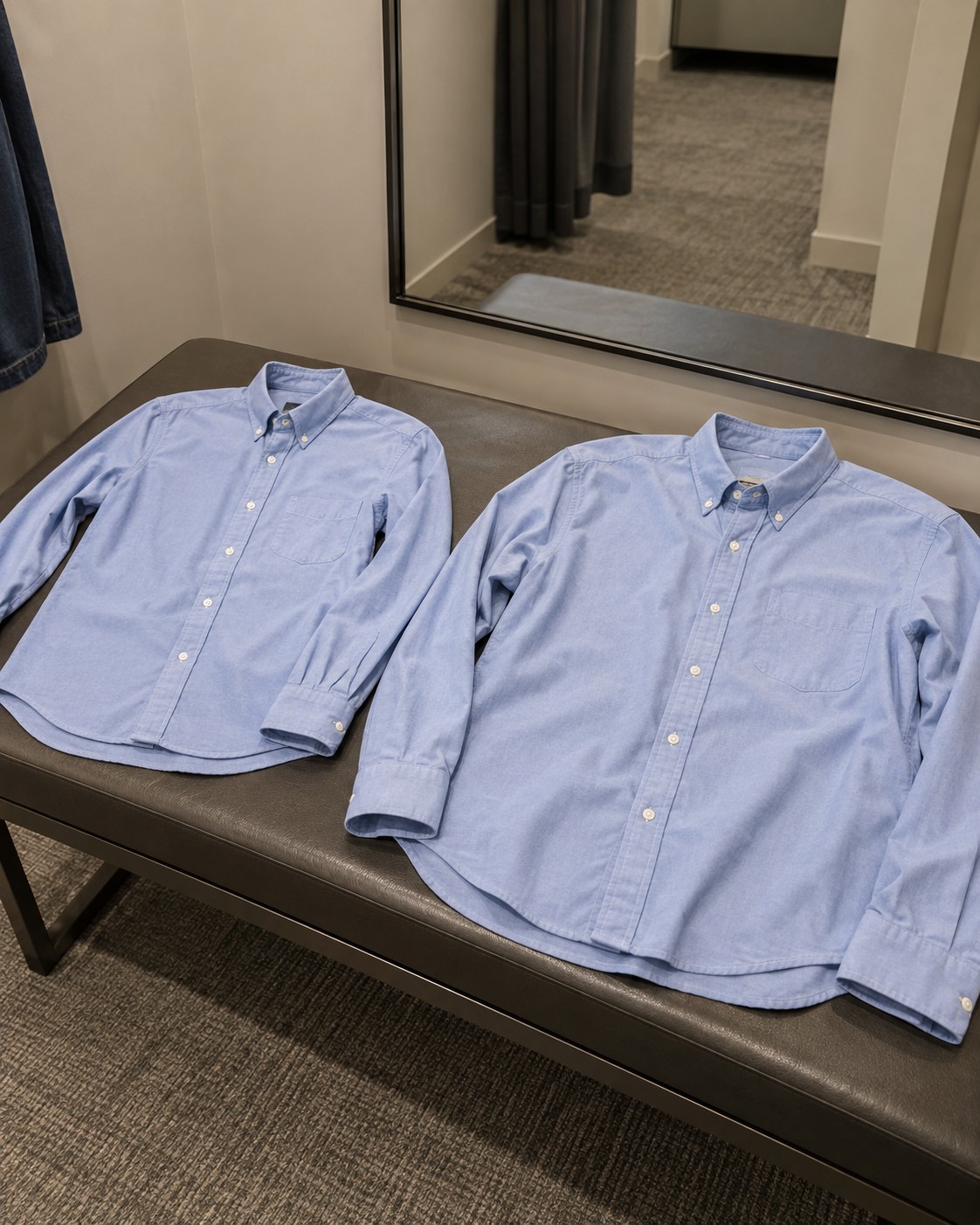
Being between sizes is often a description of two different fit problems. The smaller shirt may fit the neck but restrict the chest; the larger one may free the chest while making the sleeves too long. Neither result means your body is wrong. It means the particular pattern does not line up neatly with your proportions.
Name the problem in each size
Try both sizes with the same underlayers and shoes. Note what improves and what worsens. Use specific observations: the waistband presses while seated, the shoulder drops farther than intended, or the sleeve covers the hand. A general impression of too big or too small hides useful information.
Move normally in each. A smaller size can look appealing while standing still but fail during reaching or sitting. A larger size can feel comfortable yet place pockets or seams awkwardly. The decision should include both appearance and use.
Change the cut before accepting a poor compromise
Look for another fit in the same range, or another design altogether. A roomier thigh with the same waist, a shorter body length or a different shoulder construction may solve the issue more directly than changing the overall size.
Fit labels are not standardised, so read the measurements where available. Regular in one brand may resemble slim in another. Use a garment you like as a reference and compare the areas that matter to you.
Use the intended outfit to rank the trade-offs
Consider a shirt that will mostly sit beneath a jumper. A little extra body fabric might be less important than comfortable shoulders, but excessive sleeve bulk could still become a problem. Try the full combination rather than deciding that all hidden fabric is irrelevant. For a shirt worn alone and untucked, body length and hem shape may deserve more weight.
With trousers, test the smaller and larger options in the same chair and shoes. If the smaller waist becomes uncomfortable when seated while the larger pair hangs well elsewhere, ask whether a modest waist adjustment is feasible. If both pairs feel wrong at the crotch, that points towards the rise or pattern rather than a simple waist decision.
For outerwear, the larger of two sizes may be appropriate over your normal winter layers but unnecessary over a tee. Decide which use is the main one. No single coat has to look equally close over every possible layer, yet it should not be so roomy that the collar and sleeves become troublesome.
Pause when the compromise needs constant explanation
If keeping the garment requires several promises—new shoes to hide the length, a belt to hold the waist, and hoped-for stretching at the thigh—step back. One modest adjustment can be reasonable. Several connected problems often mean that another design will be easier to wear. The cost of returning an unsuitable option is not evidence that you should keep it; assess the garment on the use it will actually provide.
Know which adjustment is realistic
If one size fits well in the difficult areas and needs only a modest hem change, an alteration may be worth discussing. If it needs a new shoulder shape, different rise and shorter body, it is a more involved project. Ask a tailor before buying rather than assuming all excess fabric can be removed neatly.
Do not choose a tight garment on the promise that it will stretch, or a loose one on the hope that a hot wash will shrink it exactly where needed. Fabric changes are not precise tailoring tools. Follow any specific manufacturer guidance, but avoid turning uncertain future behaviour into the entire purchase plan.
For online orders, check return conditions and keep the item unwashed and unaltered while evaluating it. If neither size works, returning both is a valid outcome. A near-right purchase that irritates you every time you wear it is not more successful than waiting for a better pattern.
Once you find a cut that suits you, save the details. The useful discovery is the garment's shape and measurements, not a permanent identity as one particular size.