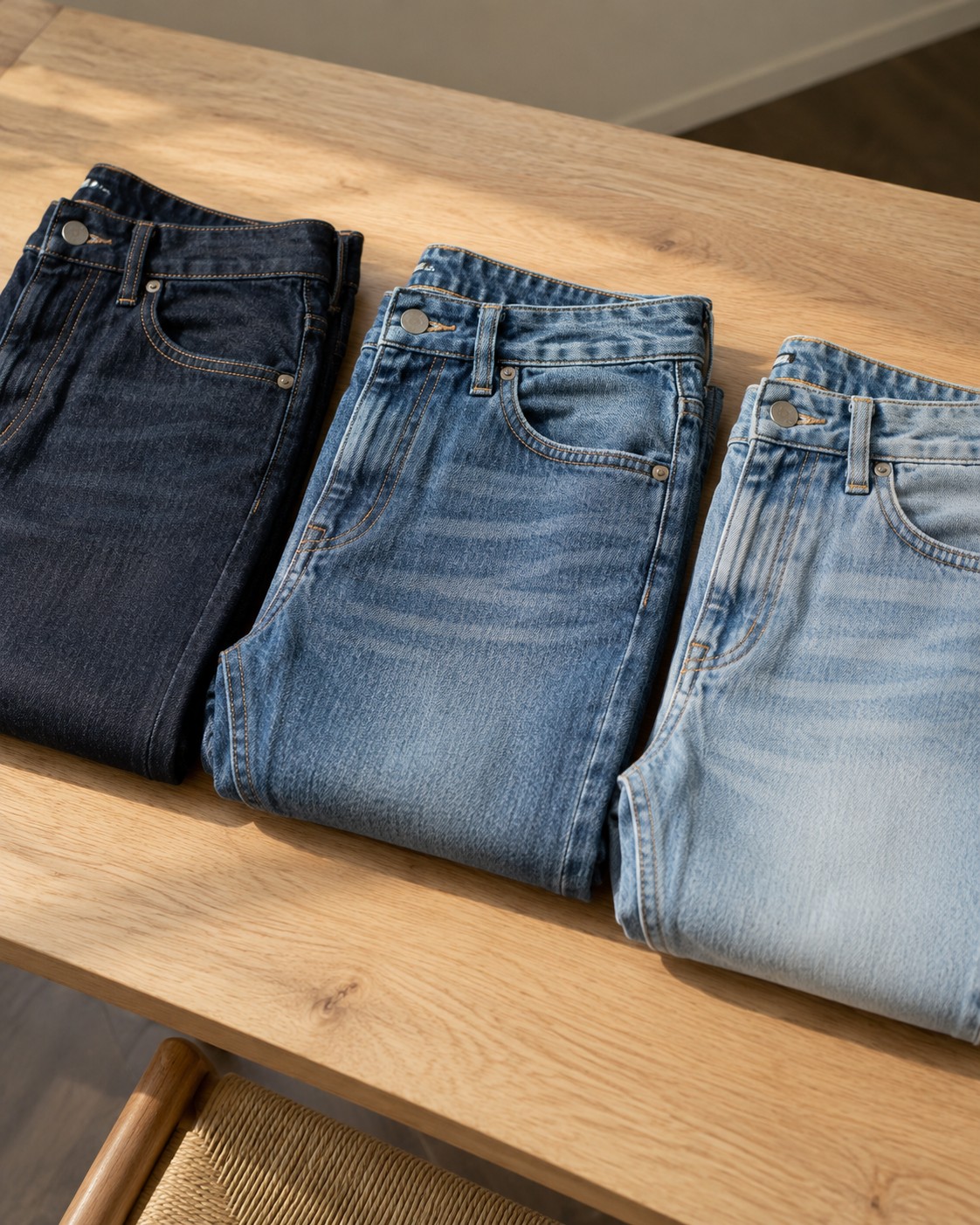
How denim weight affects everyday wear
A number in ounces describes the cloth, not how much effort you should be willing to tolerate in your jeans.
Denim weight is commonly expressed in ounces per square yard of fabric. It describes the cloth's mass over a standard area, not the weight of the finished jeans. It can help compare materials, but it is only one part of how a pair feels. Weave, finishing, fibre composition and fit all influence the experience.
Separate weight from stiffness
A substantial denim can feel stiff when new, but not every heavy fabric behaves identically. A washed pair may already feel softer than a lighter pair with a firm finish. Raw or unwashed descriptions raise additional questions about care and possible shrinkage; they are not simply synonyms for heavy.
Try the jeans in ordinary movements. Sit, bend your knees and walk. If the fabric resists comfortably but the cut allows movement, you may enjoy that structure. If the waistband or seat is painful, do not treat discomfort as proof that you are buying serious denim. A different size or pattern may be necessary.
Consider the season and the outfit
A heavier cloth can create a firm outline and substantial folds, which may suit boots and layered upper clothing. A lighter denim can be easier to pack or wear in warmer conditions. These are useful tendencies, not temperature ratings. The rest of the outfit and your own comfort still decide whether the jeans work on a particular day.
Look at the hem and knee area in a mirror. Do you like the way the cloth stacks, folds or falls straight? Weight affects that appearance, but leg width and length matter just as much. A heavy, narrow leg may collect fabric differently from a roomy straight leg made from the same cloth.
Do not buy a number in isolation
If shopping online, ask what the stated weight refers to and whether the garment has been washed or treated. Check the composition and care guidance. Avoid assuming that heavier means more durable in every use, or that lighter means poor quality. Seams, construction and how the jeans are worn also matter.
Compare the proposed purchase with a pair you already like. Is the missing role a softer daily jean, something more structured, or a lighter option for travel? That question gives the specification a purpose. Without it, weight can become another impressive detail that does not improve the wardrobe.
Follow the maker's washing and sizing instructions, especially for fabrics expected to change noticeably. Never rely on vague promises that an uncomfortable pair will eventually become perfect. The jeans should offer a plausible, comfortable starting point for the way you plan to wear them.