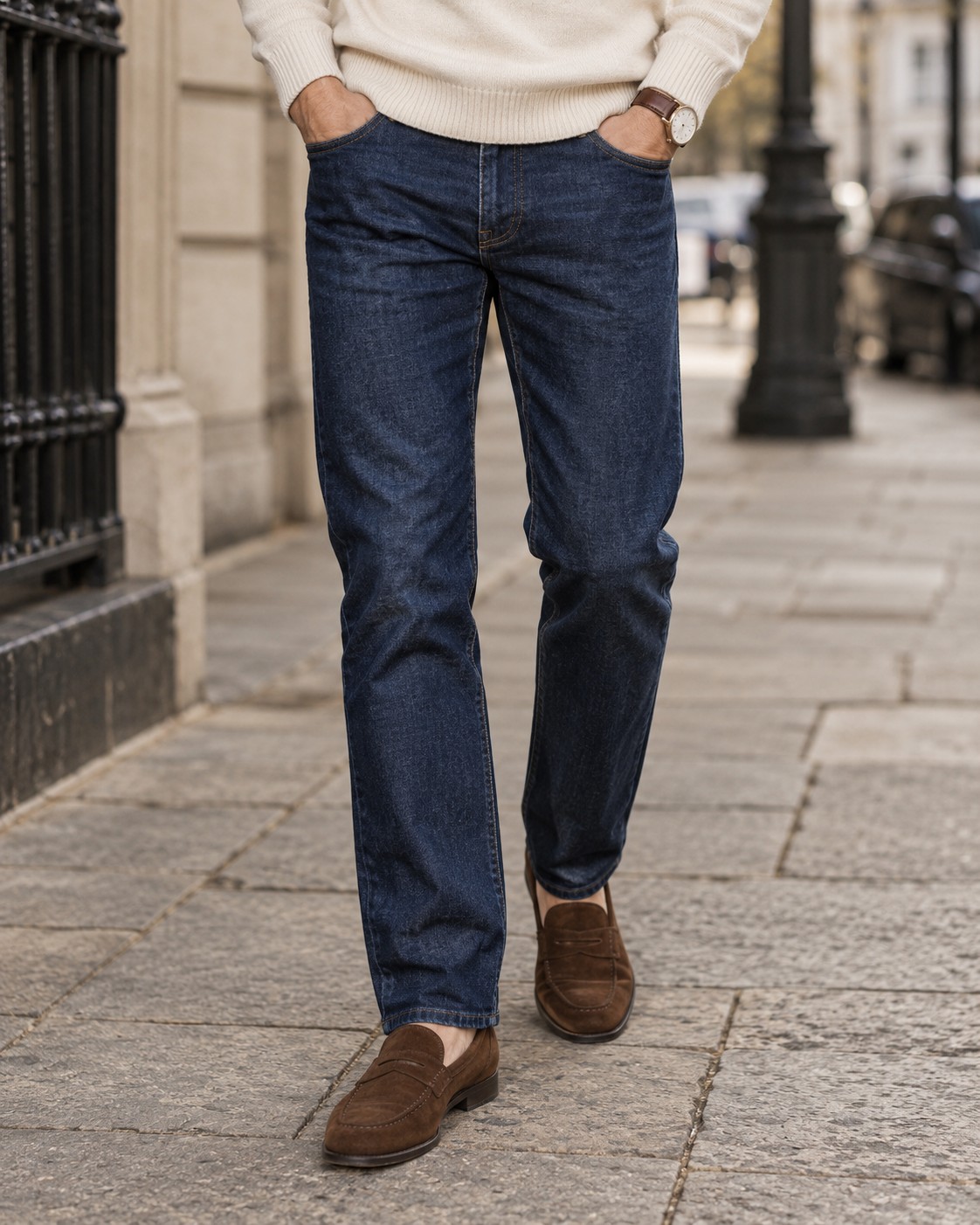
Checking jeans through the seat and thighs
A waistband that closes is only the beginning of a useful jeans fitting.
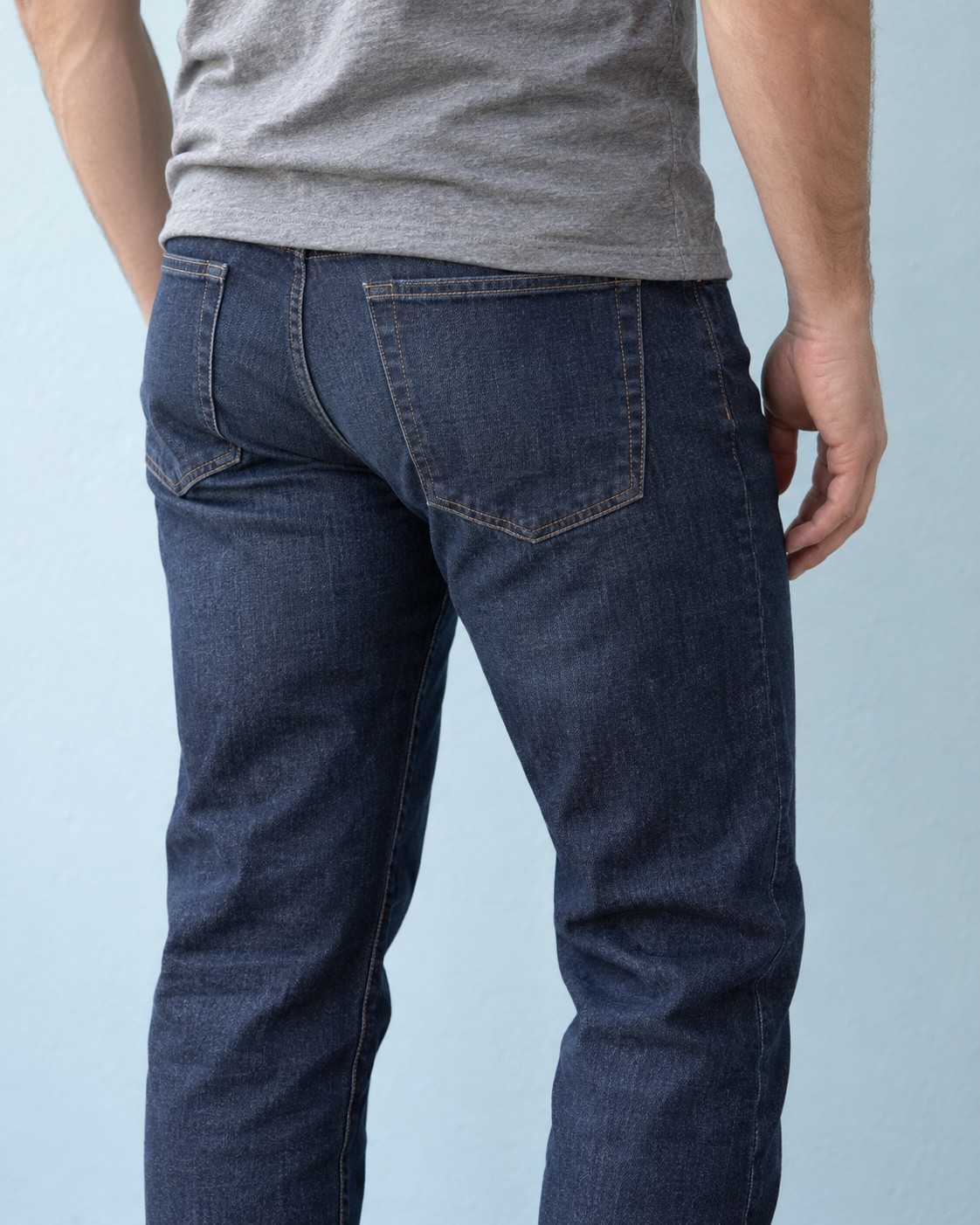
It is easy to judge jeans by the waist and length because those numbers appear on the label. The seat and thighs deserve equal attention. A pair can fasten comfortably while restricting movement below the waistband, or fit the legs well while leaving the waist loose. Those are different problems and may require a different cut rather than a different size.
Use normal movements
Sit down, walk and bend your knees. You do not need an extreme flexibility test, but you do need more than a standing mirror pose. Notice pressure across the upper thighs and whether the waistband is pulled down as you sit.
Look for persistent strain around the crotch and pockets. Some creases are ordinary consequences of movement and denim structure; a photograph of one wrinkle is not a complete diagnosis. Combine what you see with what you feel.
Separate the seat from the leg shape
A tapered jean narrows towards the ankle, but it can still have room through the seat. A straight leg does not automatically provide enough upper-thigh space. Brand names for fits vary, so read the description and compare actual measurements when available.
If the thighs are comfortable only when the waist becomes much too large, try a pattern with more room above the knee. A belt that gathers a loose waistband into folds is not an ideal substitute. Conversely, if the waist is correct but the seat hangs with more volume than you want, a different seat shape may help.
Back-pocket position affects appearance, but it is not a dependable measure of fit. Large or low pockets can make the rear view look different even when the underlying garment fits similarly. Check movement and fabric tension before judging from pocket placement alone.
Compare the patterns under the same conditions
When trying a roomier thigh fit, keep the waist size and intended rise as close as possible for the comparison. Otherwise, you may mistake extra fabric from a larger overall size for a better-shaped upper leg. Check the waistband, seat and knee in sequence, then view the full outline.
A fit that has room at the thigh but narrows strongly below the knee may feel quite different from a fuller straight leg. Try bending the knee and notice whether the calf catches the fabric. If the lower leg prevents the jeans from settling, the seat can appear to bunch even though the main restriction is farther down.
Use pockets as supporting evidence
Empty the pockets before the first fit check. A phone or wallet can create pulling that does not come from the garment's basic shape. Once the empty fit seems right, add the items you normally carry and repeat the seated test. That second step shows whether the jeans suit your actual habits.
If you habitually carry a bulky wallet in a back pocket, consider whether moving it would improve comfort before searching indefinitely for more seat room. This is not a requirement to change your routine, but it separates the garment's fit from the load placed inside it. A useful fitting accounts for both instead of blaming every fold on the size label.
Be cautious about future stretch
Denim can change with wear and washing, but the amount depends on the fabric and treatment. Do not buy painful jeans based on a vague promise that they will stretch perfectly. Follow the maker's specific sizing guidance, particularly for unwashed or shrink-prone products, and keep the return conditions in mind.
If an alteration is being considered, ask what it can realistically change. A small waistband adjustment is different from reshaping the whole seat or adding room that is not present in the seams.
Once you find a useful fit, note the model, size and fabric composition. Even within one brand, another wash or fabric may behave differently. Treat the successful pair as a reference rather than proof that every jean carrying the same waist number will fit.