Choosing one suit for occasional use
Buy for the events you actually attend and assess the complete outfit before committing.
If you rarely wear a suit, choosing one can feel more difficult than buying everyday clothes. It needs to cover the occasions you genuinely encounter without becoming an expensive answer to hypothetical events. Start by listing the last few times you needed tailoring and any known invitations ahead.
Define the job
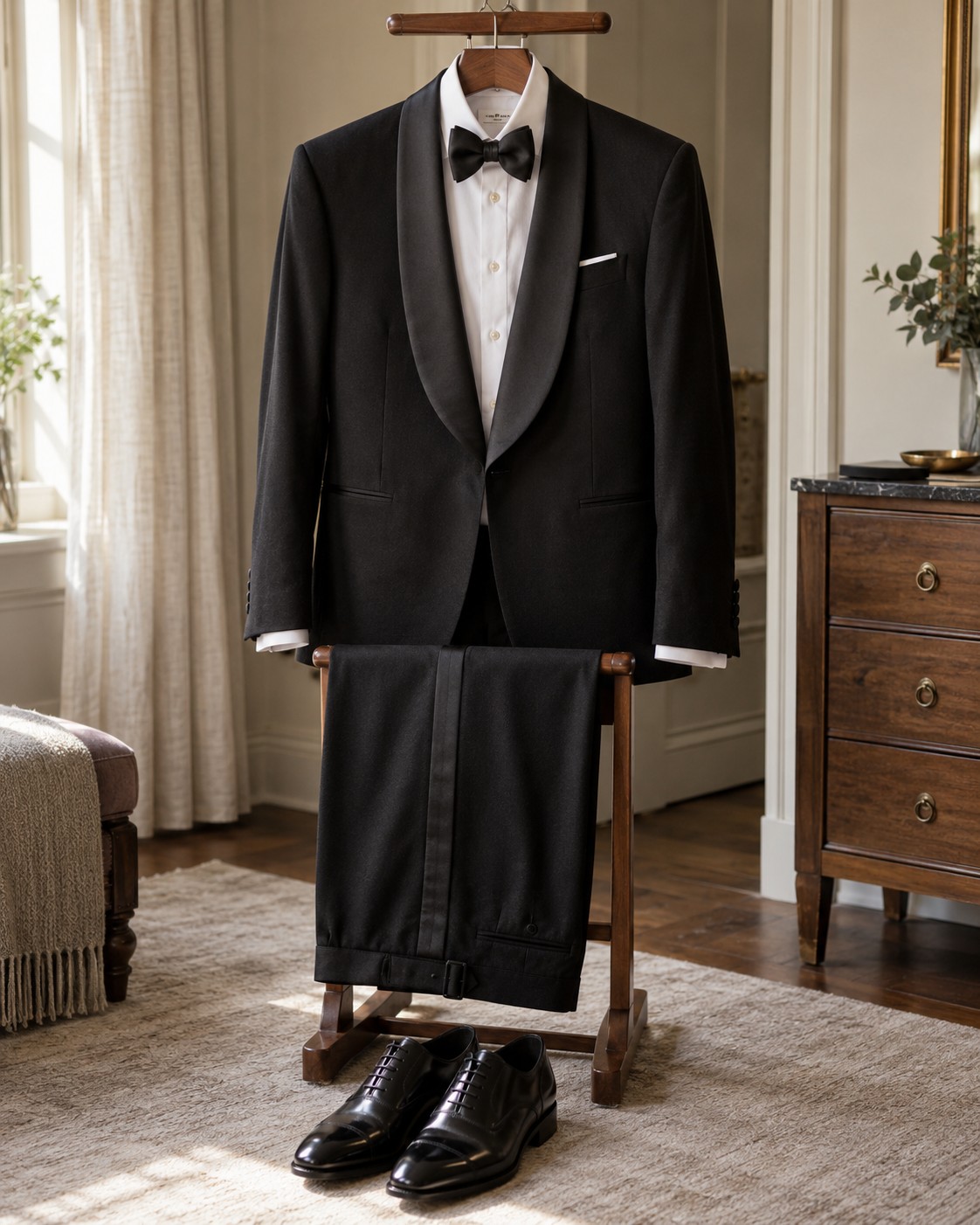
A suit for interviews, weddings and occasional formal meals may need broad versatility. A suit for a particular workplace may have more specific expectations. Black tie is a separate requirement: a normal dark suit does not replace a dinner suit when the invitation explicitly asks for one.
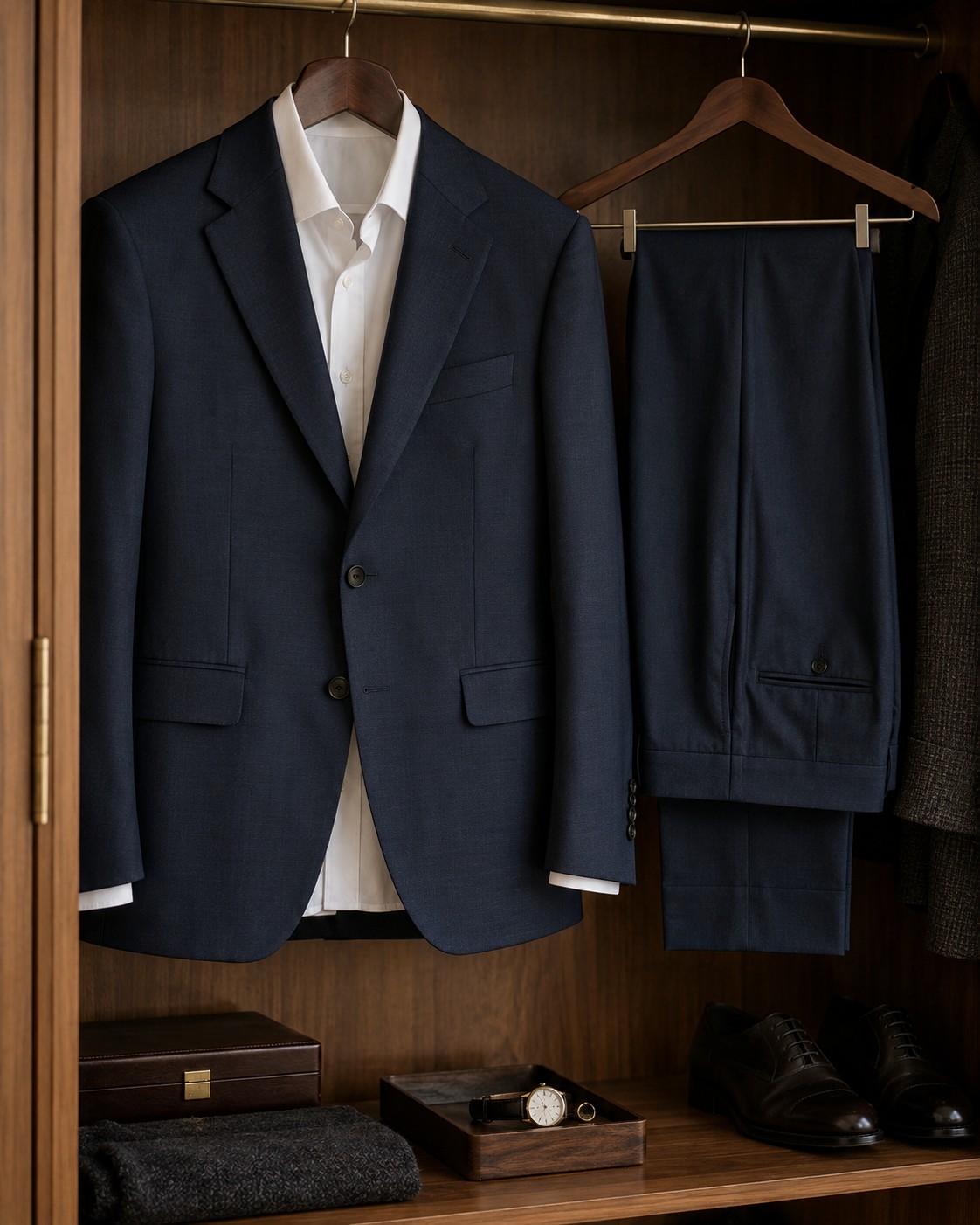
Navy or charcoal are useful starting colours for many conventional settings because they combine with several shirt and tie choices. That does not mean everyone needs the same shade. Compare the cloth in daylight and consider the occasions you expect. Very bold checks, unusual colours or conspicuous shine can make a first occasional suit less flexible, though they may be appropriate if they match your actual use.
Try the complete fit
Wear a suitable shirt and the kind of shoes you intend to use. Assess the jacket at the shoulders, collar and chest, then fasten it normally. It should not depend on an exaggerated posture to look comfortable. Reach forward and sit down. Minor changes may be possible, but a fundamentally unsuitable cut is often better replaced by another model.
Check trousers through the waist, seat and thighs. A tight waistband does not become acceptable because the jacket hides it. Ask about alterations with the actual garment in front of you; not every seam has enough allowance, and complex changes may be poor value. Have the trouser length assessed with the intended shoes rather than trainers of a different height.
Choose cloth for your use
Think about where and when the suit will be worn. A heavy winter fabric may be uncomfortable at most of your summer events. A very delicate cloth may not suit travel or infrequent but demanding use. Fibre names alone do not tell you everything about weight, weave, lining or durability, so handle and try the garment rather than relying only on marketing terms.
Read the care instructions and consider storage. You need a way to hang the suit properly and keep it ready between uses. If you cannot accommodate its care requirements, a different garment or a hire arrangement may be more realistic.
Budget for the supporting pieces
The jacket and trousers are not the whole cost. You may need a shirt, suitable shoes, socks and a tie, as well as alterations. Include those before deciding what you can spend. A less expensive suit with appropriate adjustments and compatible shoes may serve you better than a higher-priced one that leaves no room for the essentials.
Try several shirt-and-tie combinations with the suit so it can respond to different invitations. A pale blue shirt may suit one setting, while white with a restrained tie may be more appropriate for another. Avoid buying accessories in a rigid matching set unless you genuinely like the result.
Hiring or borrowing can make sense when the event is rare or the dress code is specialist. Confirm fit, availability and what is included well in advance. Buying makes more sense when you expect repeated use and can maintain the outfit. Neither choice is inherently more stylish.
Decide whether separate wear matters
You may hope to use the jacket with chinos or wear the trousers with knitwear between formal occasions. Try those combinations before treating them as a reason to buy. A textured, softer jacket may work independently, while a very smooth formal jacket can still look like half a suit. There is no need to force separate use if the suit's real job is occasional formal dressing.
Repeatedly wearing only one half can also produce differences in wear and appearance over time. Keep the pieces together for storage and follow appropriate care for each. If your main need is casual jackets and trousers, buying separates directly may be more sensible than expecting a suit to perform that role indefinitely.
Before each future event, try the suit again rather than assuming it will fit exactly as it did previously. Leave time for care or adjustment. A single suit becomes useful through readiness and appropriate use, not through a promise that it can cover every formal situation for the rest of your life.