Layers for an unpredictable spring day
Give each layer a job, and make sure the outfit still works when the middle one comes off.
A spring forecast can describe three different days between breakfast and the journey home. Dressing for that range is easier when you think about removable pieces rather than one jacket expected to do everything. The aim is not to carry your winter wardrobe into April. It is to keep a comfortable outfit underneath whichever layer you remove.
Choose the outfit underneath first
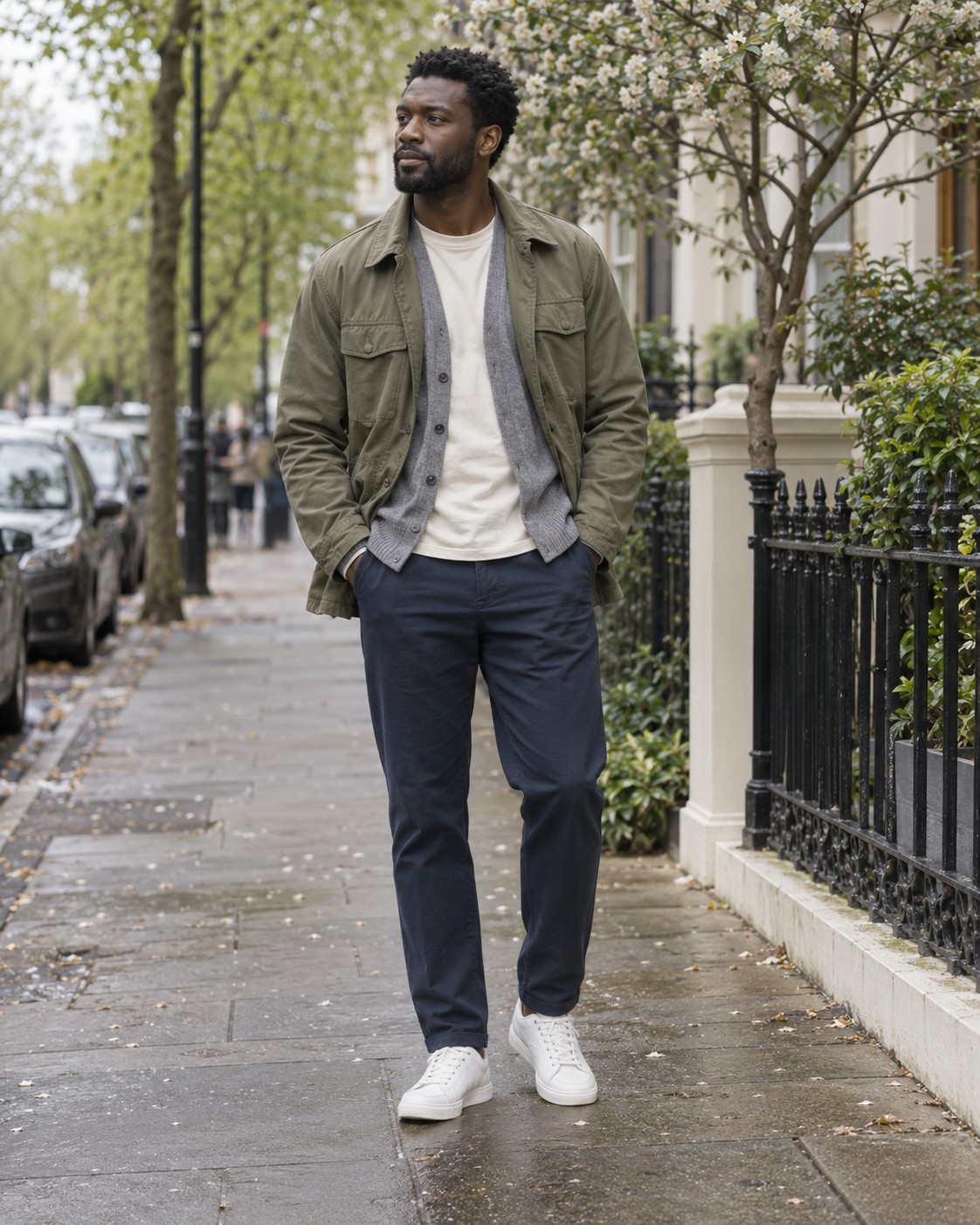
Begin with a T-shirt or shirt that you are happy to wear on its own. If the only appealing part of the outfit is a coat, a warm afternoon leaves you with a combination you never intended to show. An off-white T-shirt with straight navy chinos is one starting point. A blue Oxford with dark jeans is another, slightly more dressed option.
Add a middle layer with a different opening from the one beneath it. A buttoned cardigan over a crew-neck T-shirt creates an obvious way to release warmth. An overshirt over a casual tee does something similar. Two stiff shirt collars stacked together can become crowded, so inspect the neckline rather than assuming any two light garments will work.
Leave space for movement
The outer jacket should fit over the actual combination. Try reaching forward and closing it fully. A light coat with generous sleeves may accommodate knitwear more comfortably than a narrow bomber with tightly ribbed cuffs. Thickness is not the only issue: several seams sitting in the same place can make a shoulder feel restricted.
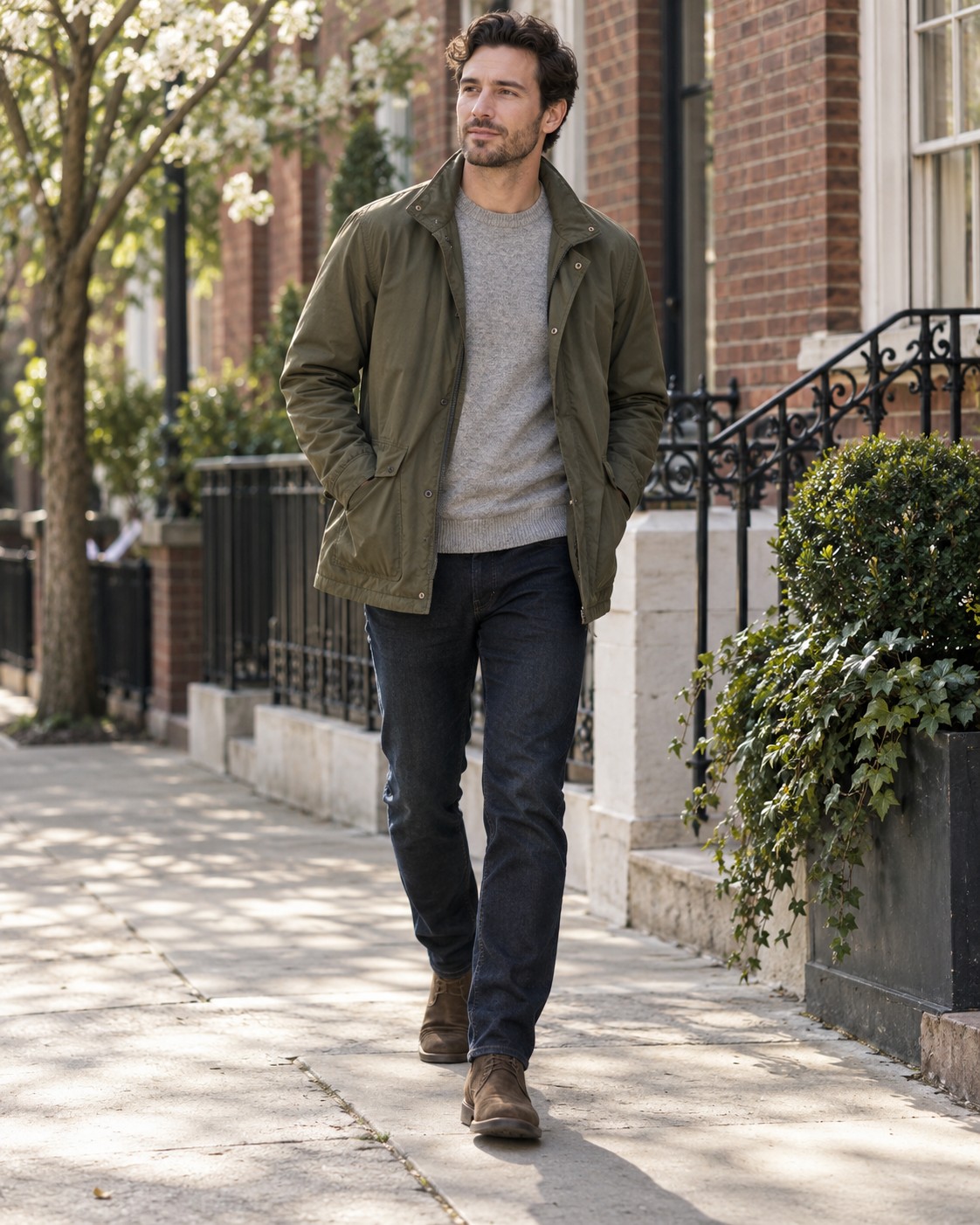
For a dry day, an olive field jacket over a fine grey knit and navy trousers gives each piece a clear role. For rain, use an outer layer specified for the weather instead of relying on a cotton overshirt. A lightweight shell is useful if it can be carried easily when the weather improves; its lining and cut matter just as much as the word lightweight on a label.
Plan for the layer you carry
Before leaving, take the middle garment off. Does it fit in your bag without displacing everything else? A bulky jumper that will spend most of the day in your hands is not an especially flexible choice. A fine cardigan or compact overshirt may be enough if the cold part of your day is short.
Keep the colour relationships simple while testing the system. Cream, grey, navy and olive can be combined without every layer needing a new colour. When the layers work independently, add a striped shirt or stronger knit colour if you want it. Spring dressing becomes less about predicting the exact temperature and more about giving yourself two or three comfortable versions of the same outfit.