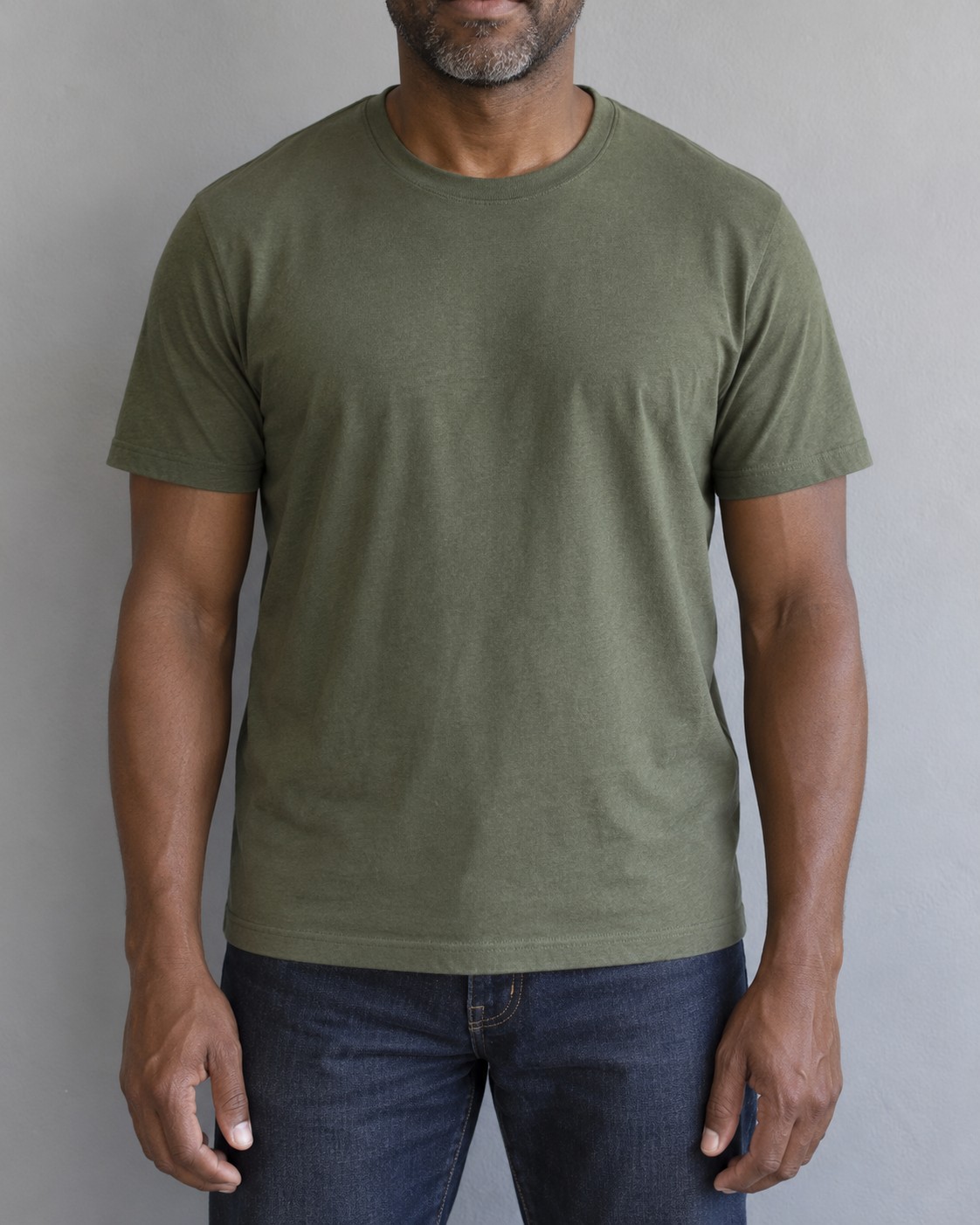
What T-shirt fabric weight changes
Fabric weight helps describe a T-shirt, but it cannot grade quality or predict comfort by itself.
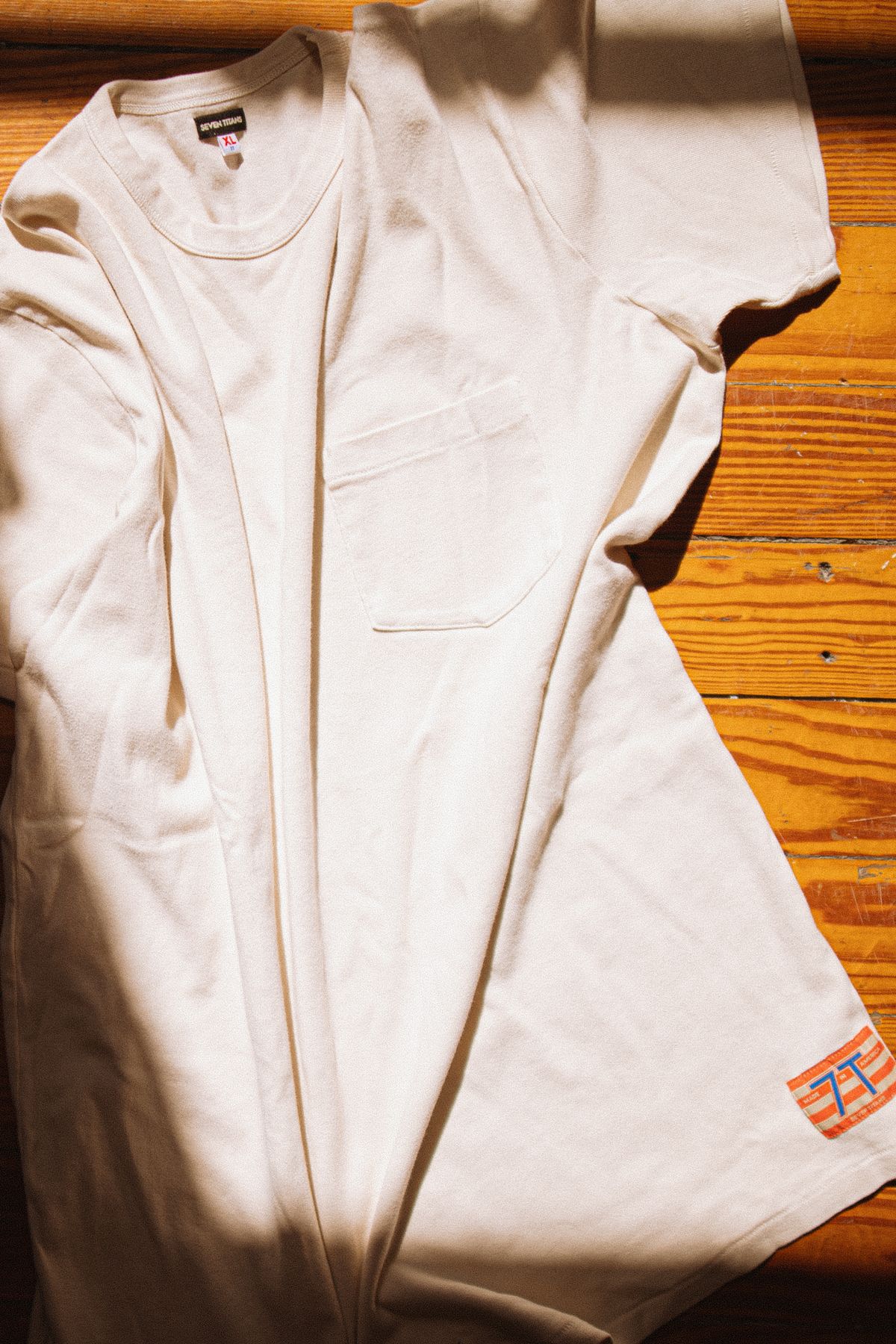
When a T-shirt listing gives a weight in GSM, it means grams per square metre of fabric. It is not the total weight of the finished shirt, and it is not a score out of a hundred. A higher number tells you there is more mass in a given area of cloth. It does not tell you whether the neckline will stay tidy, the seams are well made or the cut will suit you.
Think about the shape you want
A substantial jersey can hold a boxier outline away from the body. This may appeal if you want the T-shirt to function as the main piece of an outfit. A lighter cloth often falls more softly and can be easier to layer under a shirt. However, knitting structure, fibre and finishing all influence the result, so two fabrics of similar stated weight may feel different.
Try the shirt without smoothing it repeatedly. Look at where it catches on the waistband and whether the hem hangs evenly. A heavy shirt that sits awkwardly over your trousers is not automatically better than a lighter one that falls cleanly. Likewise, a light shirt that clings in places you dislike is not improved merely by being cooler-looking on a product page.
Check opacity and layering separately
For pale colours, inspect the shirt in daylight. Put your hand behind a single layer, then try it over the underlayer you normally use. Weight can influence coverage, but colour, knit density and stretch also matter. Do not assume that a specific GSM guarantees an opaque white shirt.
For layering, put on the overshirt or jumper you plan to wear. Check the neck, upper arms and waist. A substantial tee can bunch beneath a close outer layer, while a light one may be more comfortable there. Conversely, if you regularly remove the outer layer indoors, you still need to like the T-shirt on its own.
Choose for the day, not the specification sheet
A structured tee may be useful with loose chinos and simple trainers on a mild day. A softer, lighter version may be preferable beneath a casual shirt or when packing several layers. Neither deserves a permanent place at the top of a quality hierarchy.
Inspect the collar, seam alignment and care instructions alongside the weight. If shopping online, look for photographs showing the shirt hanging naturally rather than pulled tight by a model's pose. Compare it with a garment you already know. Your own preference for drape, coverage and movement is more useful than chasing the largest number in the listing.