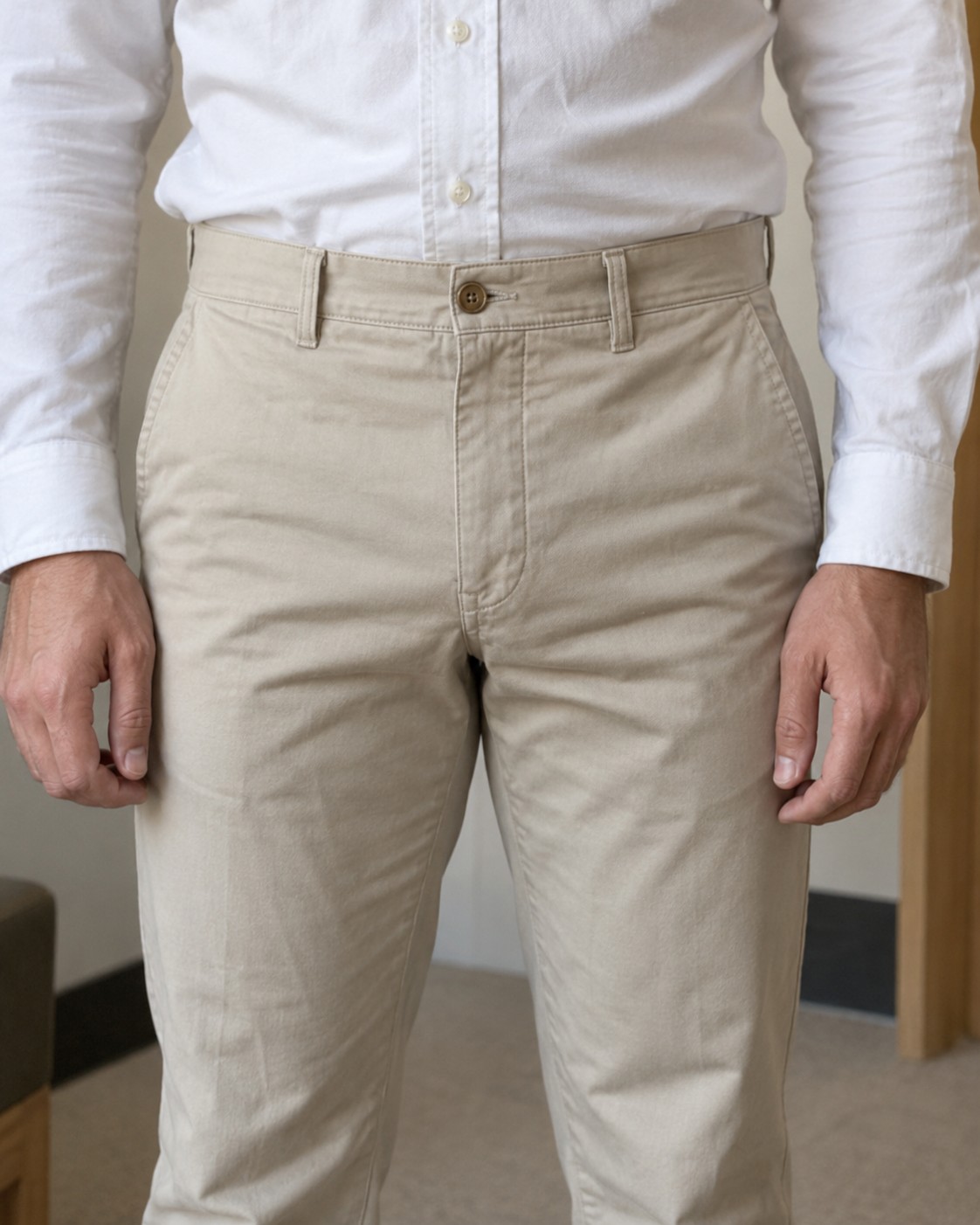
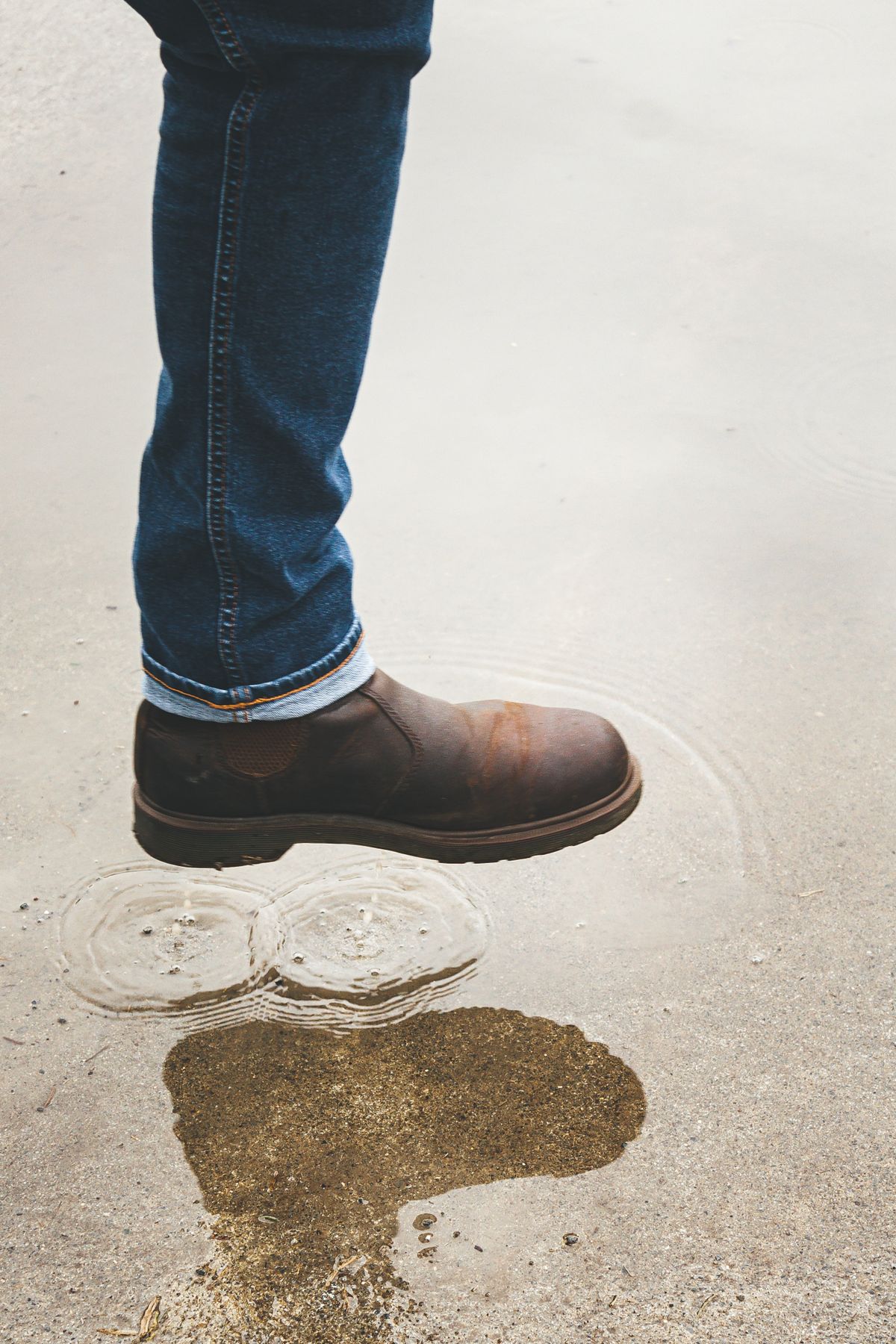
Choosing a trouser break
The fold above the shoe depends on hem width and footwear as well as trouser length.
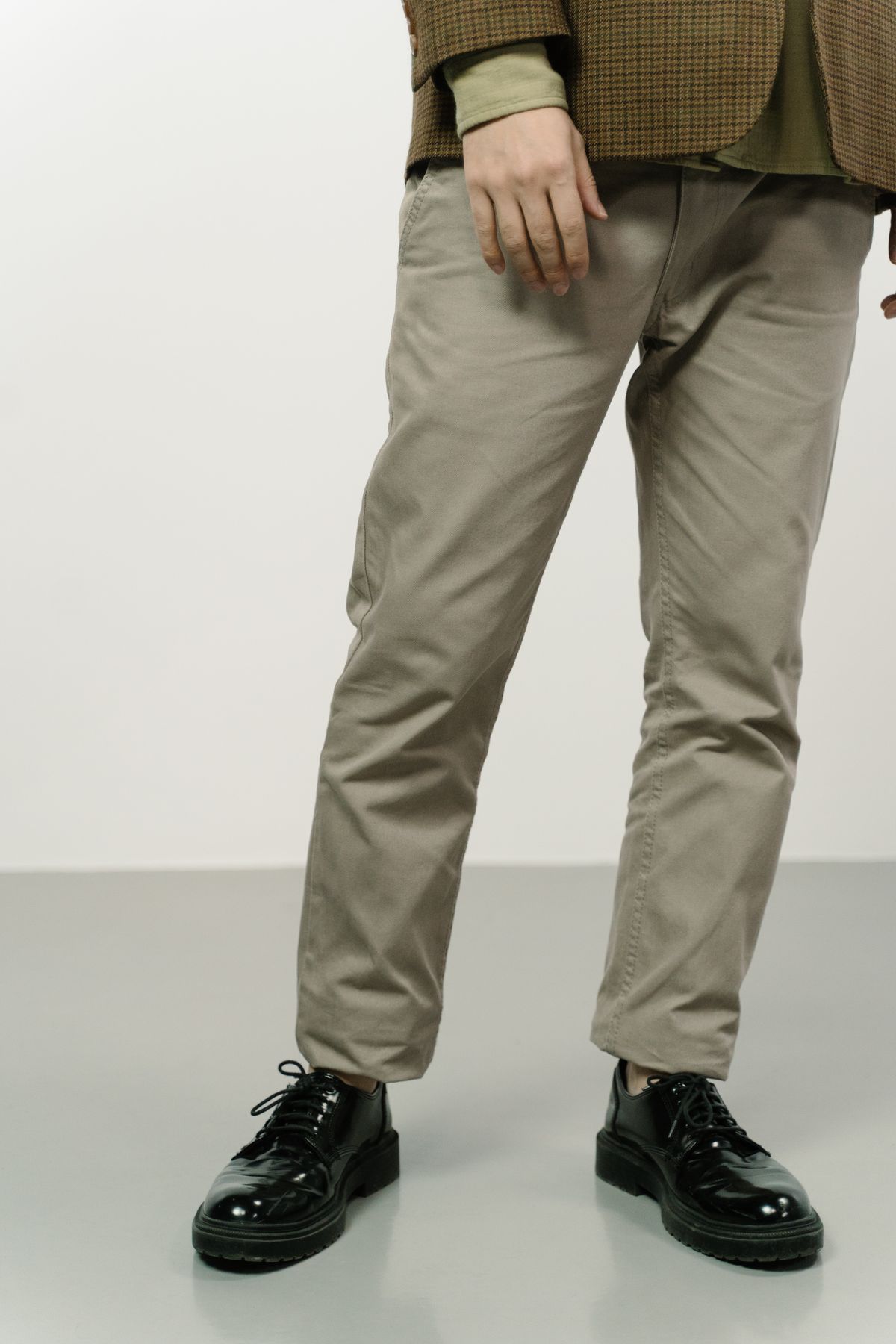
A trouser break is the fold created where the hem meets the shoe. Little or no contact produces a cleaner, shorter line; more length can create a more noticeable fold. These are choices, not ranks of correctness. The useful question is which result works with the trouser shape, shoes and setting.
Start with the shoes you will wear
A substantial shoe raises the point where fabric meets it. A low-profile loafer may allow the same hem to fall farther. This is why a length chosen barefoot in a fitting room can look wrong once you put shoes on.
Try the trousers with the most-used pair first. If you want them to work with several shoes, accept that the break may vary slightly. It is often more sensible to choose a comfortable compromise than to expect identical folds over very different footwear.
Look at the leg opening
A narrow opening can catch above the shoe and collect fabric even when the trousers are not especially long. A wider opening may fall more freely. Shortening a narrow pair can reduce the gathering, but it also changes the amount of ankle or sock visible. Consider the whole effect before making an irreversible alteration.
With a fuller straight leg, a modest break may look natural. With a deliberately cropped shape, no break may be part of the design. Neither needs to be copied onto every other pair in your wardrobe.
Pin while standing naturally
Set the waistband where you actually wear it, put on the shoes and stand with your weight balanced. Have the hem pinned, then look from the front, side and back. Avoid standing unusually upright or pulling the trousers higher for the fitting.
Sit down before approving the length. More sock will show as the trouser leg rises, which is normal. The question is whether you are comfortable with the amount, not whether you can prevent movement entirely.
If asking a tailor for a change, describe the visual result and show it pinned rather than relying only on phrases such as slight break. People use those terms differently. Mention any important second pair of shoes and ask about retaining cuffs or original hem details where relevant.
Finally, do not confuse length with fit through the knee or calf. Persistent twisting or catching may come from the cut rather than the hem alone. Settle the overall fit first, then use length to finish the outline you have chosen.