Editing a wardrobe before buying more
Find out why clothes are unworn before deciding that the solution is another purchase.
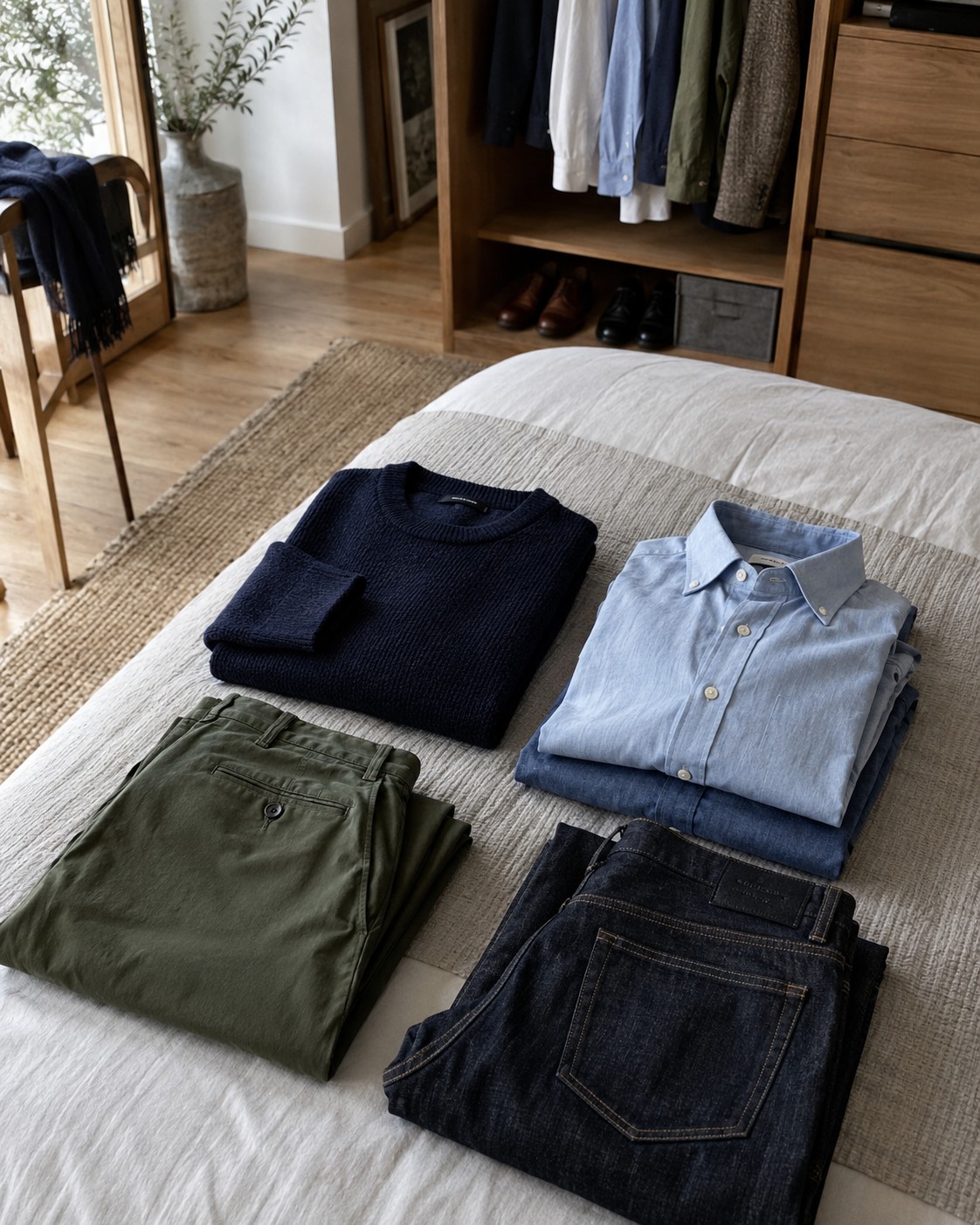
A wardrobe edit is not a competition to own the smallest number of garments. It is a way to understand what you wear, what gets in the way and where an actual gap exists. Start when you have enough time to put things back properly, not ten minutes before leaving the house.
Work through one category
Choose shirts, trousers or another manageable group rather than emptying every cupboard at once. Put the pieces where you can see them and try on the uncertain ones. Use the shoes and layers you normally wear so that the decision reflects an outfit, not an isolated garment.
Separate a fit problem from a styling problem. A shirt that pulls across the chest is not made comfortable by a better belt. Trousers that fit well but feel unfamiliar may simply need a different top or shoe. Be specific about the issue before assigning the item to a discard pile.
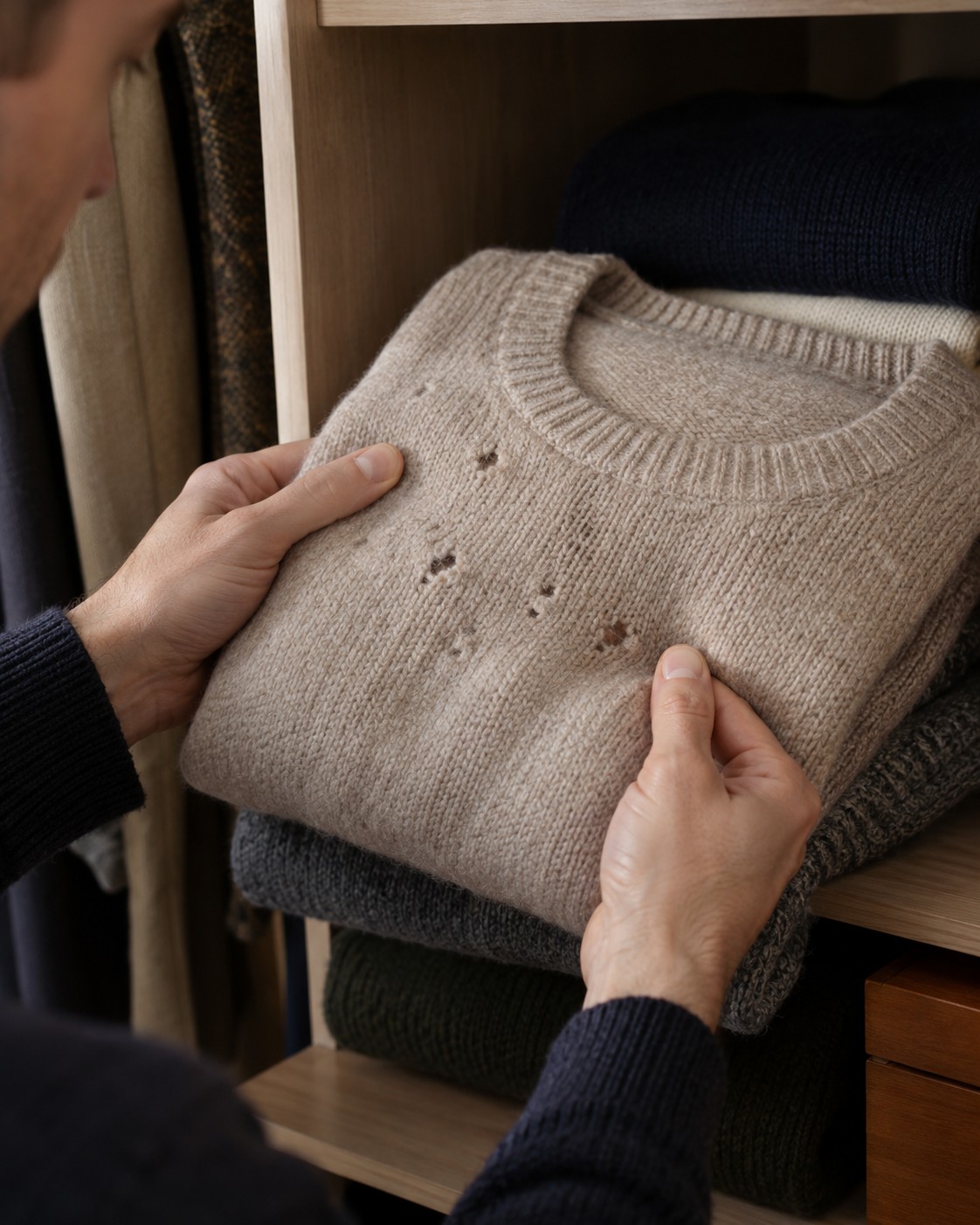
Also identify care obstacles. Perhaps a jumper is unworn because it needs repair, or a shirt remains in the basket because its ironing routine is inconvenient. Write down the actual task. A small repair can return a useful garment to rotation without buying anything new.
Create useful groups, not moral judgements
- Wear now: fits, suits your days and is ready to use.
- Repair or alter: has a clear, feasible task and a reason to keep it.
- Reconsider: needs an outfit test or a decision about changing circumstances.
- Pass on or recycle appropriately: no longer useful to you and not worth the proposed work.
These are temporary working groups, not labels about whether a purchase was a personal success or failure. Clothes can stop fitting your life because your work, activities or preferences change. You do not need to punish yourself by keeping something indefinitely.
For the reconsider group, set a sensible review date and keep a short note of what you are testing. An indefinite maybe box often becomes another hidden wardrobe. If the item needs several new purchases before it can be worn, ask whether it really belongs in the current one.
Build outfits from what remains
Make a few combinations for the days you actually have: ordinary work, weekends, an invitation and poor weather. Photograph them if useful. Look for repeated failures rather than isolated wishes. If every work outfit lacks suitable shoes, that is a clearer shopping need than a general feeling that the wardrobe is boring.
Record the gap precisely: a light layer that fits over a shirt, trousers with more room through the thigh, or shoes comfortable enough for the commute. Include the colours and garments it must work with. That brief is more useful in a shop than a long generic essentials list.
Test a suspected gap before shopping
Suppose you keep avoiding a pair of brown trousers because no top seems to work. Lay them beside your blue shirt, cream tee and grey knit rather than relying on memory. Try each combination with the shoes you normally use. You may find that the trousers were never the problem: their hem may catch on one boot, or the only shirt you tried previously may have been too long worn untucked.
If all three combinations still feel wrong, describe why. The brown may be much warmer than the rest of your wardrobe, the fabric may feel too formal, or the cut may restrict movement. Those are different decisions. A new shirt might address a colour preference; it will not resolve an uncomfortable seat. This test turns an abstract feeling into something you can act on.
For garments awaiting alterations, obtain an estimate and ask what the work can realistically achieve. Place a limit on the unresolved pile. Keeping ten unsuitable items because they might be transformed later can hide the two repairs that would genuinely return useful clothes to rotation. Make the repair appointment or release the item from the plan, rather than repeatedly counting it as an available outfit.
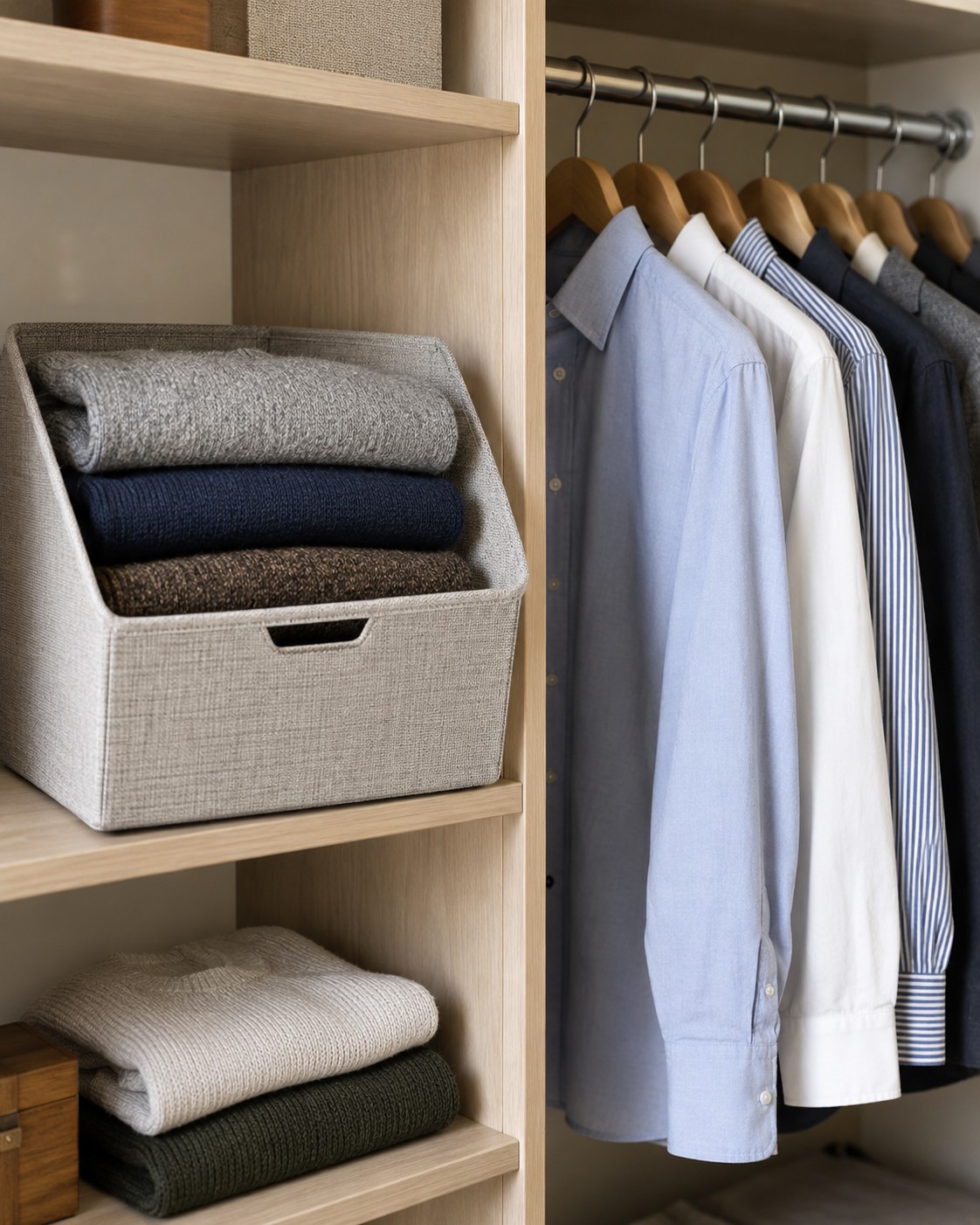
Finally, return clothing in a way that makes it easy to see and reach. Fold knitwear appropriately, support jackets and give frequently worn pieces accessible space. A successful edit changes how the wardrobe works on a normal morning. The number of items removed is secondary.