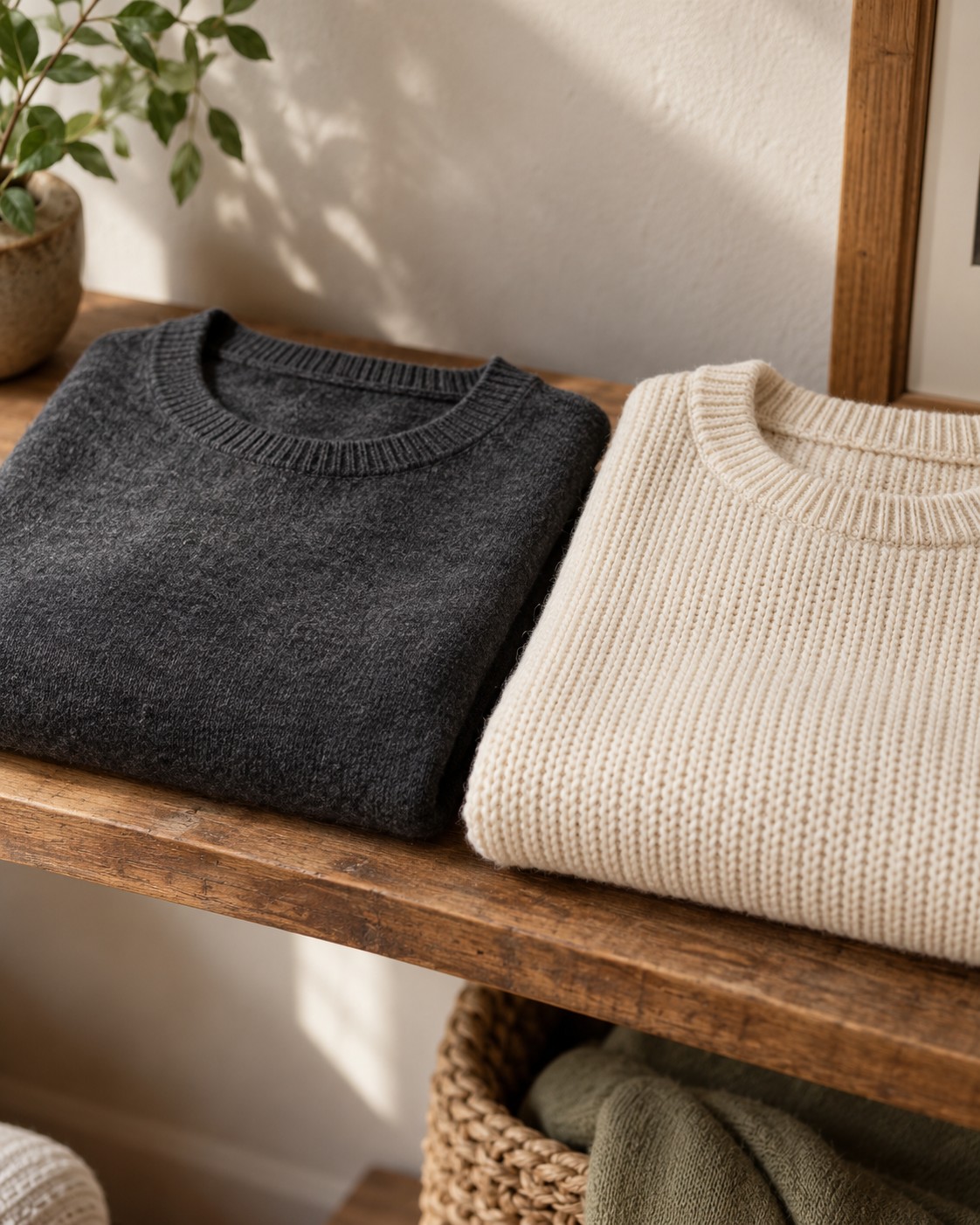
Choosing a crew-neck jumper
Start with the neckline and the layers it must accommodate, then consider colour and texture.
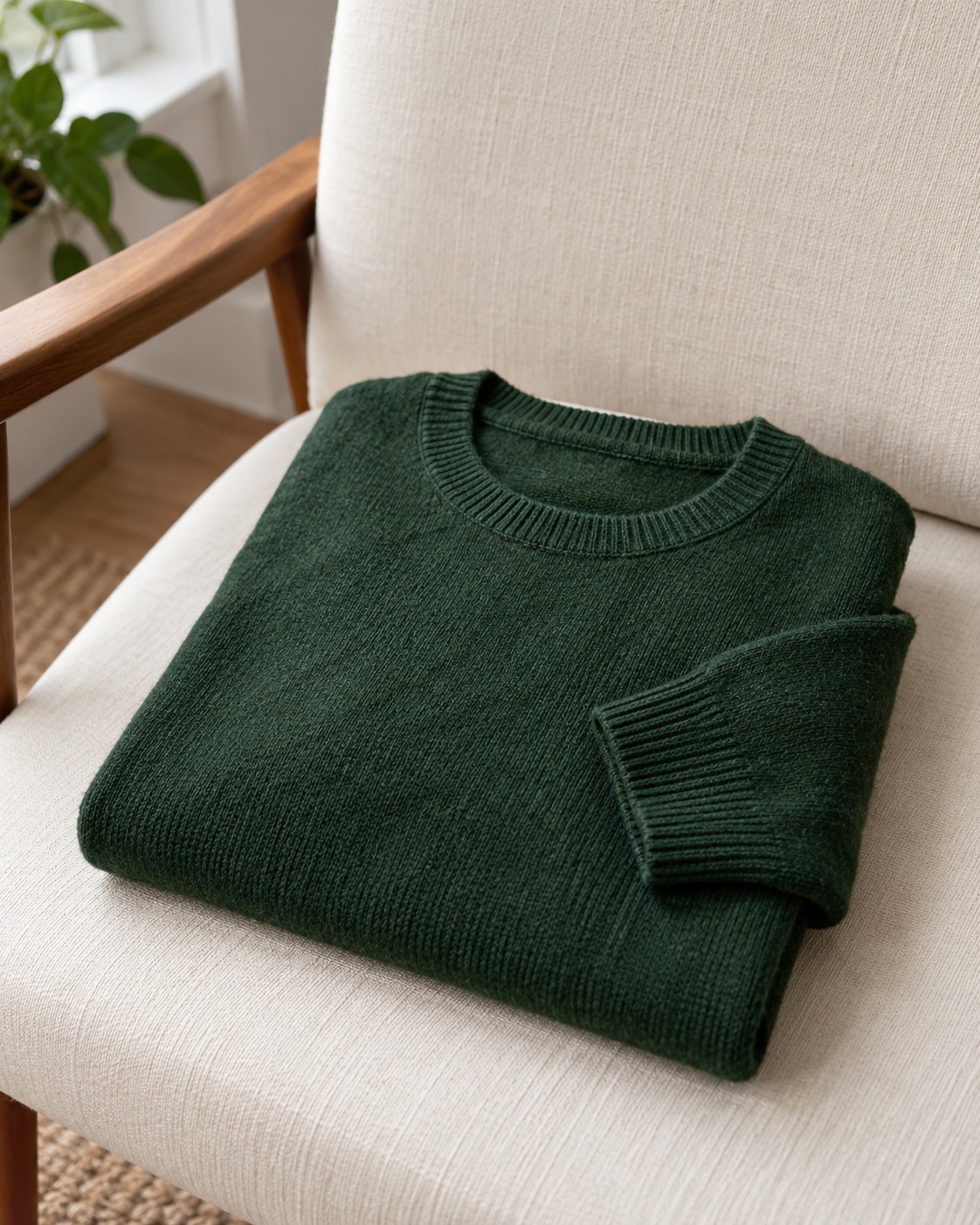
A crew-neck jumper looks simple until you try to make one serve every purpose. The version that fits neatly beneath a jacket may be too close for a substantial shirt underneath. A roomy textured knit may look good with jeans but feel bulky at a desk. Before choosing a colour, decide which of those jobs matters most.
Try the neckline with your actual base layer
With a T-shirt underneath, check whether you like the amount of the tee that shows. A narrow strip can look intentional; an uneven collar that moves around may be distracting. There is no need to hide every trace of the base layer if it works with the outfit.
With a collared shirt, see whether the shirt collar sits naturally inside or outside the jumper neckline. Do not pull everything into place for the mirror and then assume it will remain there. Move your shoulders and turn your head. If the two neck openings constantly fight each other, choose another pairing.
The jumper's neck should feel comfortable without being stretched to get the effect you want. A neckline that already looks distorted on the hanger deserves closer inspection. Fine ribbing and broad ribbing can frame the face differently, so consider the whole upper body rather than the colour alone.
Look at the hem while seated
A ribbed hem may grip at the waistband and create a little fullness above it. That can be part of the design. It becomes a problem when the jumper continually rides up or needs to be pulled down. Sit in the trousers you intend to wear and see whether the layers remain comfortable.
For a first everyday combination, try a mid-grey crew neck with dark jeans and simple leather or canvas shoes. If your trousers are usually grey, navy or brown knitwear may offer more useful contrast. You do not need every neutral shade; one that connects several existing outfits is enough.
Texture can do as much as colour. A smooth knit sits quietly with a patterned shirt or jacket. A cable or pronounced stitch adds visual activity and may work best with simpler supporting pieces. Check sleeve volume under a coat before deciding that a thicker knit is your winter solution.
Read the care label and think about drying space. Knitwear that needs reshaping or flat drying should fit your routine. Fibre names do not replace garment-specific instructions. A jumper you enjoy wearing and can maintain is more useful than a theoretically superior fibre that stays folded because washing it feels like a project.