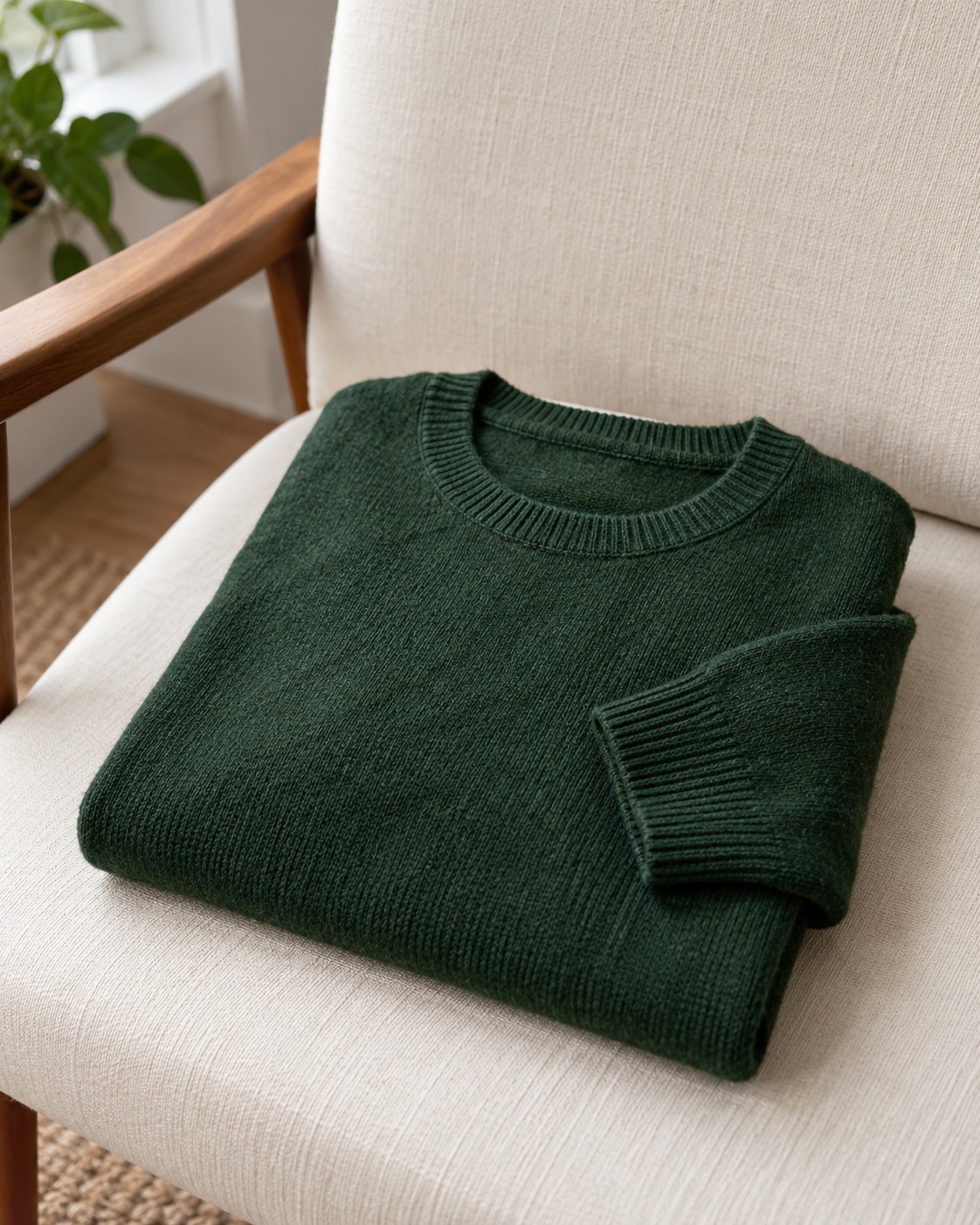
Choosing between merino and cotton knitwear
Compare actual jumpers, not an idealised version of one fibre against the cheapest example of another.
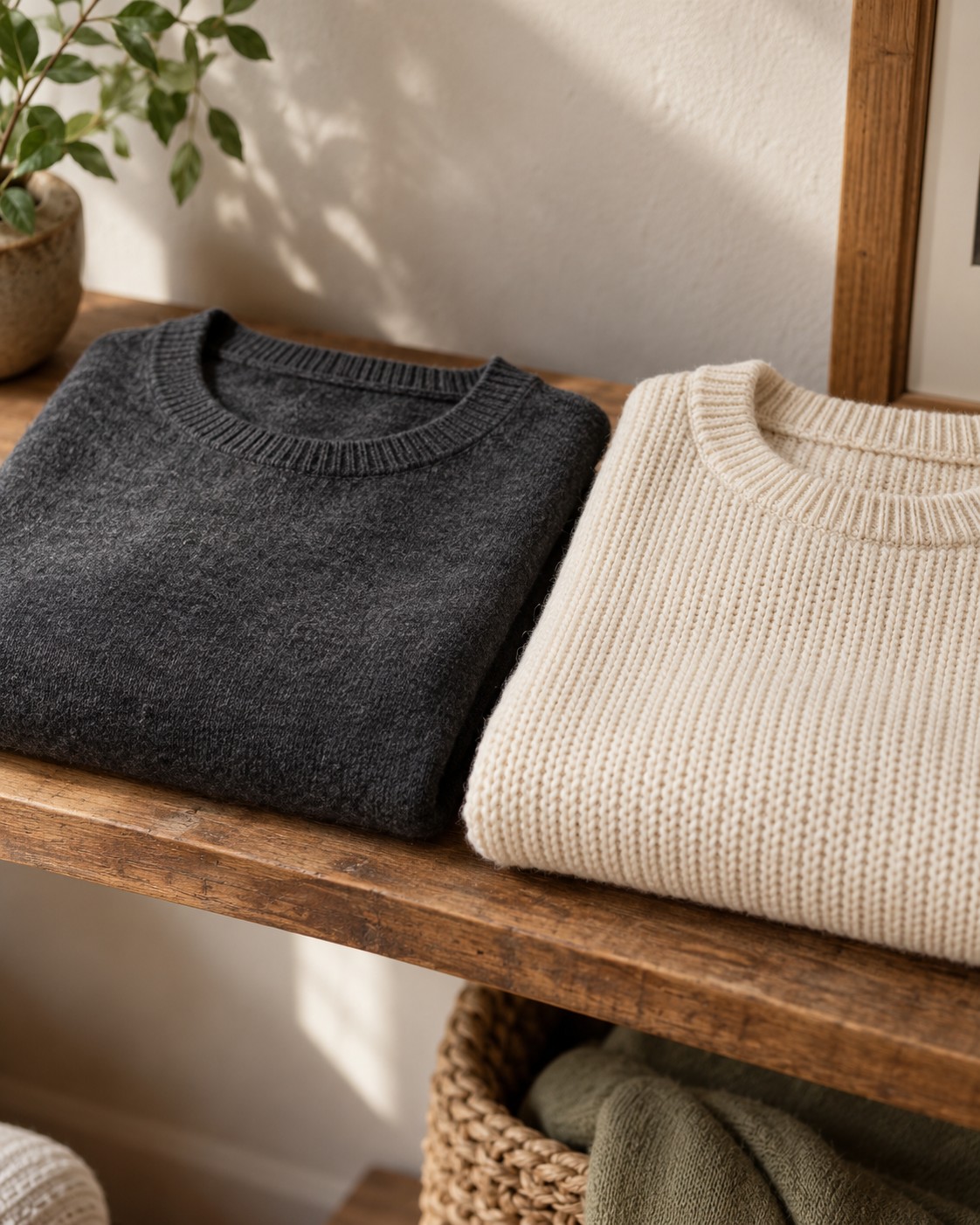
Merino and cotton knitwear are often presented as competing answers to the same question. In a wardrobe, they can do different jobs. The better choice depends on how the garment is knitted, what you wear beneath it, the conditions you dress for and the care routine you are willing to follow. A fibre name does not settle all of those questions.
Compare like with like
A fine merino jumper and a thick cotton cable knit differ in more than fibre. Their weight, stitch and cut all affect how they feel. If possible, compare garments of broadly similar thickness and shape first. This makes it easier to notice the surface, stretch and drape rather than attributing every difference to the material label.
Try each one over your usual base layer. If you wear a T-shirt under every jumper, the feel at the neck and wrists may matter more than how the whole garment feels against bare skin. If you intend to wear it directly against the body, spend time assessing that contact. Do not talk yourself into irritation because a fibre is described as premium.
Consider where the jumper will spend its day
For a heated office, a fine layer that fits comfortably under a jacket may be more useful than the warmest-looking option. For a day moving between outdoors and indoors, easy layering can matter more than maximum thickness. Neither cotton nor merino automatically makes a complete outfit suitable for a particular temperature.
Look at how the garment hangs after sitting and moving. Does the hem remain where you want it? Are the elbows comfortable? Does the neckline hold a shape you like? Cotton knitwear can have a pleasing substantial feel, while fine merino can create a lighter visual layer, but the actual construction may reverse the impression you expected.
Colour also changes usefulness. A navy cotton knit that works with five existing outfits may earn more wear than an unusual merino colour bought mainly for the fibre. Equally, if you already have several substantial cotton layers, a finer knit could fill a genuine gap.
Be realistic about upkeep
Read the care label on each garment before deciding. Some wool garments allow a suitable machine cycle; others require a different process. Cotton also does not guarantee unrestricted hot washing or tumble drying. Finishes, trims and construction influence the instructions.
Think about drying space and how often you need the jumper back in service. If your home has limited room for flat drying, that is a real purchase consideration. If you regularly travel, consider whether the garment's care needs fit the trip rather than assuming you will change your habits for it.
For blends, check the percentages and the whole care instruction. A blend is not automatically a compromise or an improvement. It is a particular fabric that should be judged on its own behaviour.
Compare two real wardrobe jobs
Imagine a jumper for a short commute followed by a heated office. You plan to wear a shirt beneath it and a coat outside. Here, a comfortable neckline, manageable sleeve bulk and the ability to remove a layer may matter more than finding the warmest fibre. Try each candidate with that shirt and coat, then judge the complete system.
Now consider a substantial weekend knit worn over a tee. You may prefer a more pronounced surface and a hem that holds a broad shape. A cotton knit could suit that preference, or a wool version could do so; the stitch and construction need to be assessed directly. The examples lead to different purchase criteria without declaring a winner between fibres.
If buying online, look for the garment's weight or construction description, close-up images and exact care instructions. A composition line alone cannot show whether the finished knit is open, dense, springy or heavy. When that information is missing, allow for uncertainty rather than filling it with a general claim about the fibre.
A useful decision before checkout
Write down the missing role in one sentence: a fine layer under a work jacket, a substantial weekend jumper, or a light knit for cool evenings. Then choose the garment that fulfils that role with the least friction. You may reasonably end up with either fibre, or with both for different jobs. The aim is not to win a material debate; it is to own knitwear that gets worn.